Saturday, November 9, 2013

Swayambhu


Apparently a day off, not from work but hospital; a laid back day and didnt do anything the whole day. An evening tea on the dining table with moms ( mom & aunty) and cousin and we decided to go out. Apparently, we chose Swayambhu for its lights and glory at night. Well, Anju was ready to join us too with her unfinished work. As usual, I had to wash my face and so did my cousin.  Yeap, runs in the family. 


There was not much of a traffic on the way. If you live in Nepal or have been to Nepal, you know how troublesome it is to travel. Glad, the road took us all the way up to the hill, moms wouldnt be able to walk otherwise. At the entrance mom handed me some coins to throw in the wishing pond. The target was a medium size pot in the centre of the pond. Mom did it at once, for us was a struggle. It wasnt that easy as it looked and I wasted coins, didnt do the count though. 


Up the stairs and we found people with long lenses and tripods capturing the beautiful view of the city. Most of them were tourists I guess. I started taking photos while others were busy buying candles. One of the vendors nearby hello-ed me and showed me a gesture. Apparently, I was a tourist for her for she saw camera on my hand. Praying with candles with monkeys around was a bit tricky. I didnt want to close my eyes for long since there's a possibility of monkeys snatching whatever you have in your hand. They almost had us when my aunty stepped her foot onto one of them. They attacked in a group and in an instance.  I could do nothing but scream for I was a distance apart, with camera on my hand.  I could see one of the biggest monkeys hanging onto my mom's kurta, couple on aunty's and others running randomly from all the corners circling moms, Sagar and Anju. Glad, there were other people around, helping to get away. This didn't want us to stay for long for there were moneys everywhere and we were more cautious this time to move around. Anyway, the night was beautiful so was the place. It was a bit chilly on the top but the lights and the vibe was just as awesome. I didnt want to leave considering if there were no harmful and WWF champions 'chimpus' around.


Tuesday, November 5, 2013

Bhai Tika


This is the  final day and is the most important of Yamapanchak/Tihar festival. On this day, sisters pray for their  brothers' longevity and prosperity offering them various delicacies. The ritual includes offering 'makhamali' flower, walnut, ring of mustard oil and Paanch Rangi Tika which includes five colours- yellow, green, red, blue and white. According to hindu religion, Bhai-tika is performed by sisters to protect their brothers from Lord Yama, the god of death. 


 My assistant for decorating mandap was my five year old brother Abhinash (aunty's son). It was hard to get hold of him but I drove him off with the gun, not really. He helped me throughout and in return I put tika on him. He was more interested in what's on the mandap. 

When there are too many elders, you just have to follow them. You copy them, repeat whatever they do. One of  the fupus didn't turn up. Perhaps to do with her religion, I  woulnt know. We had fun.

The ritual of offering sagun, fruits and nuts and gifts continued throughout. It was sort of give and take. I could see smiles on all of them including the audience, the moms. Sisters were happy with the gifts/cheques they received  and so were brothers. Cousin Sagar did a ramp walk  covering himself top to toe with the gifts he received.

All this time, I was thinking of all of us, seven of us, lucky seven of us. We used to have so much fun, memories remain. If only going back was possible, I would to childhood days.

Monday, November 4, 2013

Mha Puja


Mha Puja (half of the family missing
Mha Puja and Nepal Sambat are celebrated on the same day. It is a unique tradition of celebrating New Year, Nepal Samabat of Newars. It signifies an auspicious beginning of the New Year. Mha Puja meaning worshipping of the self. It celebrates the spirit within oneself. It provokes prosperity and longevity of oneself. 
Mha Puja Mandap
The ritual is usually in the evening. Half a day was spent on prep and the rest on decorating mandap. The eldest female of the family, in this case my mom played the role. We decorated mandap for all the members of the family while moms (mom & aunty) were busy in the kitchen. Different colours, grains, fruits and flowers were used for its decoration each playing a significant role. Uncle drew a mini mandap of oil within a mandap which represented the human soul. The reason it being inside is that a person shall prosper throughout the year. A person is believed to be blessed by each deity represented by fruits and grains. It is a must, one should wash his/her body before the ritual. I waited until the last minute and mom calls me 'basi khwa'. Yes, I didnt wash my face the whole day.
Enthusiasts on this day celebrates New Year with a rally called 'Nhu Daya Bhintuna' meaning Happy New Year. This day is regarded as auspicious and of religious importance.


Friday, October 25, 2013

Road Trip Day 6 Meghauli

Meghauli, Tharu village. 
'Ghongi' -Tharu dish
On the left, my hut for the night, right for the oldies.
Tharu Lunch
UN bikes I havent seen/noticed before.
Muglin- fish and prawn.
Muglin, street vendors
Meghauli, an authentic Nepalese village in Chitwan.  It was a unique experience and very authentic. Road trip was one thing but home stay at Tharu village was a different experience. Being able to stay in a clean comfortable hut was something I didn't expect it to be fun. Although we had trouble finding the village, it was worth a visit. We were welcomed with water and 'Ghongi' snail, a traditional Tharu dish. The way you eat is similar to of bone marrow, to suck meat out of the shells is a win. It wasn't that easy. I had to use toothpick so did Prakash uncle. Dad ate like an expert. He had this planned beforehand. Ghongi is one of the delicacies of Tharu and indigenous people. This was followed by 'bhurey macha' tiny fish and then dinner. We were a bit late for their cultural program but sleeping in a hut was quite a experience. One of the Tharu women came with warm water and showed how to lock the door and windows before she vanished in the dark. I was pretty amazed how simple the hut looked inside and out and yet so comfortable.


Wake up call for wild safari elephant ride  and we were lead to the jungle. We spotted few animals and birds but not tiger. We had a great hope since we were on the other side but not in the commercial zone. We did spot it's foot steps though. Elephant ride lasted for about an hour and more and we came back to the hut for lunch- sticky rice, saag, allu and chutney. We were bidden farewell with blessings and locally picked marigold. Our stay at the village of Meghauli was an unforgettable experience that I would not have wanted to miss.
Next  stop, UN house in Chitwan to meet the oldies' friends. For an hour long chit chat, I remained invisible with a coke and pizza in my hand. I was extremely bored. They had to cover a decade long conversation. Muglin, the next for its very popular fish and prawns. Few more hours on the road and we were home by dinner time.

Thursday, October 24, 2013

Road Trip Day 5 Koshi Tapu

Another night in Biratnagar, the same hotel and I had a good night sleep. The next morning started with meet ups (oldies friends) in and around Biratnagar including their ex work place, UN house. We then headed our way back. The next pit was Koshi barrage, also known as Koshi Tapu. Koshi is the largest river of Nepal and Koshi barrage is a flood control sluice across the Koshi river, near Nepal-India border. It has 52 gates altogether and are controlled by Indian officers although it is in Nepal. Koshi Tapu Wildlife Reserve is popular for bird watching, arna -wild water buffalo (we spotted many) and fresh water dolphin. One more time, they were old time stories from the oldies on how they used to spend hours in Koshi Tapu and the fun they used to have after work. Prakash uncle was full on with his camera capturing Koshi river and the surrounds. I did too. Unfortunately, I've lost them all (syncing problem) but here's couple of videos on stop by-s.
1:Banana bargain at Bhatabari, apparently famous for banana.
2: Fish farming next to the highway. I forgot the name of the place but it was pretty warm, couldn't stay out much longer.


Wednesday, October 23, 2013

Road Trip Day 4 Suketar

We woke up early in the morning since we had a long way to come back. I didnt realise we had the view until I came out of the room and saw this morning misty mountains. It was beautiful. We carried onto our journey after morning breakfast. Dad insisted on Nepali (free range) egg. It was quite a different taste, perhaps to do with the cold weather.
Morning view at Suketar, behind our accomodation.


This is where we spent our two nights. We had to crawl up the stairs.


The nearest town we headed to was Taplejung. It must be an hour trek if you walk down the road and 10-15 minutes if you drive. Taplejung occupies an area ranging from 670 meters to 8586 meters (Mt Kangchenjunga) above sea level. Kumbhakarna is an outlier of Kangchenjunga. Lucky that we get to see the range from the road because of its clear weather condition. It looked like a sleeping giant with a big nose and therefore the name, Kumbhakarna which makes it easy to remember I think.
Kumbhakarna Range 


As we continued our trip, we passed through small villages. Old wooden houses and narrow streets with colourful flowers in their balconies, they all looked beautiful. Since the oldies are into gardening, we succeed in collecting as many as we could fit into the hatchback. The credit goes to my dad for his great communication skills. We dropped in many places and was pretty amazed with Eastern culture of giving it for free. Handing them stuff we had, apparently pre-packed food didn't leave us that shameful.

Oldies busy secure the plants.

Sun set from tea garden.
Immediately after we were off the hills was Terai plain. However, tea Ilam tea didnt leave us and continued through the plain. We were lucky to see the sun go down from one of the tea gardens. 


Tuesday, October 22, 2013

Road Trip Day 3 Pathivara


We were to be picked up 4 in the morning since our vehicle wouldn't pass this point. Our alarm went off at 3:30. We poured out water from the big jar we found outside the room thinking we could do some wash up before we could move on. After pouring a bucket full we smelled a strong kerosene. We spilled some while pouring it back into the jar. 

Pathivara Temple
On our way back to Suketar. We had to get off the vehicle twice.
The oldies drink for the night, 'Tumba'.


Two hours of bumps and jolts and it was the most strenuous part of the whole adventure. We were headed to the base of Pathibhara Temple (3794m) from where our trek started. It was seven when we started to walk after a brief tea. Such a glorious time to walk, we saw the sun rise over the mountains. The glowing yellow beam spread over the mountains was one of the most spectacular things to watch. We climbed up the green hills gentle at the beginning watching this amazing view. Everything we saw was just so wonderful.


Once we started escalating uphill, it seemed never ending. It was uphill all the way up to the tallest hill.   It was more like climbing to the highest room of the tallest tower to the princess. The path continued uphill for the rest of the day. It was one in the afternoon when we reached the top. It was a unique exhilarating experience. It took us almost six hours to reach the temple. It would take a day if you were to trek from Taplejung bazaar which people used to do before the roads were in.  I was afraid I would get AMS Altitude Mountain Sickness, thanks to all those wonderful people passing by for their advise and the popcorn motif. 


Pathibhara Temple is one of the major attractions of Taplejung reached by hindus and Buddhists for spiritual fulfilment and blessings. The Goddess Mukkumlung at Pathibhara is said to have  miraculous powers and is believed to have answered her devotees' prayers. It is located on the top of the tallest hill which runs parallel to himalaya range. The myth of shepherds  losing a lot of sheep and Pathibhara appearing in their dreams with a promise that their sheep would return with an offer of few sheep remarked a culture of sacrificing sheep today. 


We were back to Suketar in search of a new place to stay. We didnt have luck but somehow got a room warm enough, with extra blanket. The oldies were warmed up with 'Tumba' and we slept like a log, after  dinner.

Monday, October 21, 2013

Road Trip Day 2 Ilam


We woke up early for a trendy breakfast of omelettes, tea and a very thin slices of toasted bread. I have never seen  bread cut so thin and evenly. We were ready to roll by seven in the morning. Although early, I found Biratnagar streets to be crowded. The streets were lined with array of concrete buildings and shops. The city looked relatively large in size which I didn't expect at all. All the time I was listening dad and Prakash uncle talk about their old times. 'This is where we used to go for sekuwa, this for coke, that for dinner etc.'

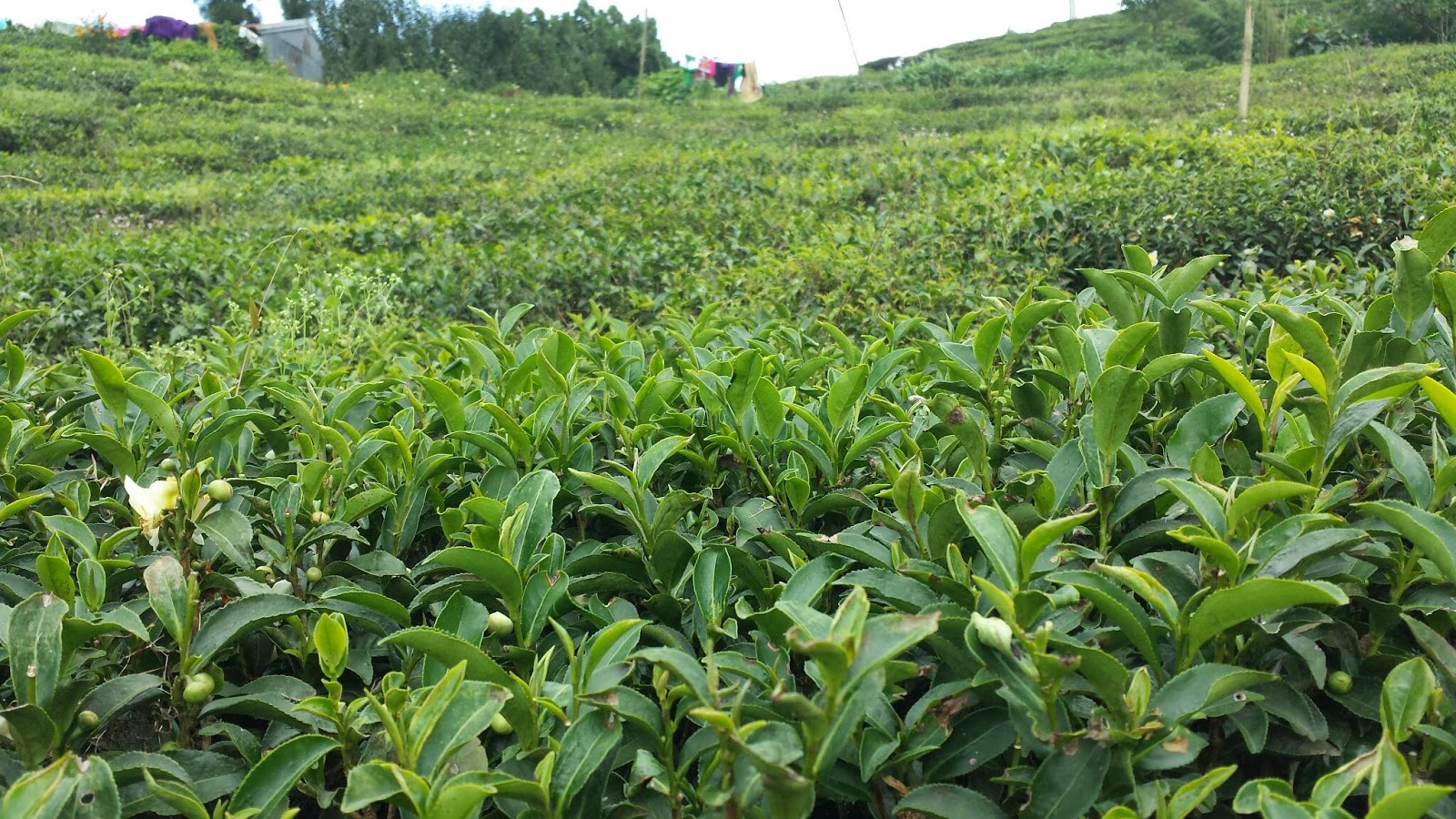
Ilam tea garden
Our first stop for the day was Ilam, for tea. The tea was the best we had throughout the entire trip. The taste of the tea was quite different with its jammy sweetness, pepper and some other flavour I couldnt  tell but it lingered for a while. Talk about Nepal tea and you know it's Ilam tea. It is a synonym. Ilam is in hilly region, mostly Mahabharat range and is the headquarter of Ilam District and Mechi zone in the Eastern Development Region of Nepal.


Tea garden, Ilam
Venturing down the green alleyways of tea, Prakash uncle was busy taking photos. Watching him take photos with great patience, I felt the lacking. He even said, I should get another camera and suggested Nikon. It's easy to get yourself lost and lose track of time wandering around the lush green  rolling hills. The landscape was stunning. It was beautiful fields of green. Also, did horse riding.  Once again, I was given an orientation on Ilam, this being their very familiar place. So, here I go. Ilam is one of the most developed places in Nepal and has the highest per capital income. It is popular for five '' - 'Amreso' broom, 'aduwa' ginger, 'akbare' chilly, 'alaichi' cardamom. Milk and potato are the main source of income including its famous Ilam tea which is exported to Europe. There were much more on Ilam but I guess I should stop here.

We were heading our way to Suketar, Taplejung which is in northeastern Nepal. Taplejung is famous for its proximity to Kangchenjunga (8586m), the third highest mountain in the world. The river we cross through was the Tamur river and it flows through the district.


By the time we reached Suketar, it was pretty dark. We picked one of the guesthouses right next to Suketar airport which we didnt realise until the next day.  Since it was late, we had to adjust with a room. One room three beds in a row on ground floor and it was pretty cold. The only light we had in the room was a dim solar light shared in between two rooms only enough to see where the things are.  Nothing we could do but have dinner and go to bed. But before that was to find a toilet. It was up the hill behind the house which I couldn't locate initially. With the help of micro LED light, the only light we had from Prakash uncle found the one hole pit toilet which was a struggle. I couldn't imagine pooping onto that hole, that would be hard, seriously.


WebRep
currentVote
noRating
noWeight

Sunday, October 20, 2013

Road Trip Day 1 Biratnagar

Bid a farewell, (a brass kalash with wide base filled with water)


Bags packed, ready to go.

Our road trip begins the day after Dashain. We headed out of Kathmandu. The drive out of the city was a bit delayed as we had some fixings to do. In about an hour or so we were on Banepa Bardibas Highway. This route is a major eastbound exit from highly populated Kathmandu valley which links the valley with Eastern Terai region for a total of 158 km. The highway wasn't that bad considering it is still under construction. We had our lunch at NepalThok.  It was past one by the time we had our first meal of the day. Nepalthok is a junction for people of Ramechhap, Sindhulli, Kavre to get to capital city.


Sekuwa at Bardibas


Local fish and prawns at Bhantabari
The next pit stop was Bardibaas where we had 'sekuwa' break six in the evening. Still on Bhantabari was next for some local fish and tea break and finally Biratnagar. Well, I couldn't tell much about Biratnagar but we saw a huge crowd on the road ten in the evening. Apparently they were on their way home after work. Biratnagar is a home to many industries based on agriculture. It is located at the border with India and therefore a major centre for trade and commerce with India. By the time we got to the hotel it was pretty late. After a quick check in we were escorted to our rooms. I had to turn on both the AC and fan for a quick run down for room temperature was pretty high. A quick shower before bed and slept with everything on including lights and TV, something I need to get over with.


Our first night in Biratnagar